
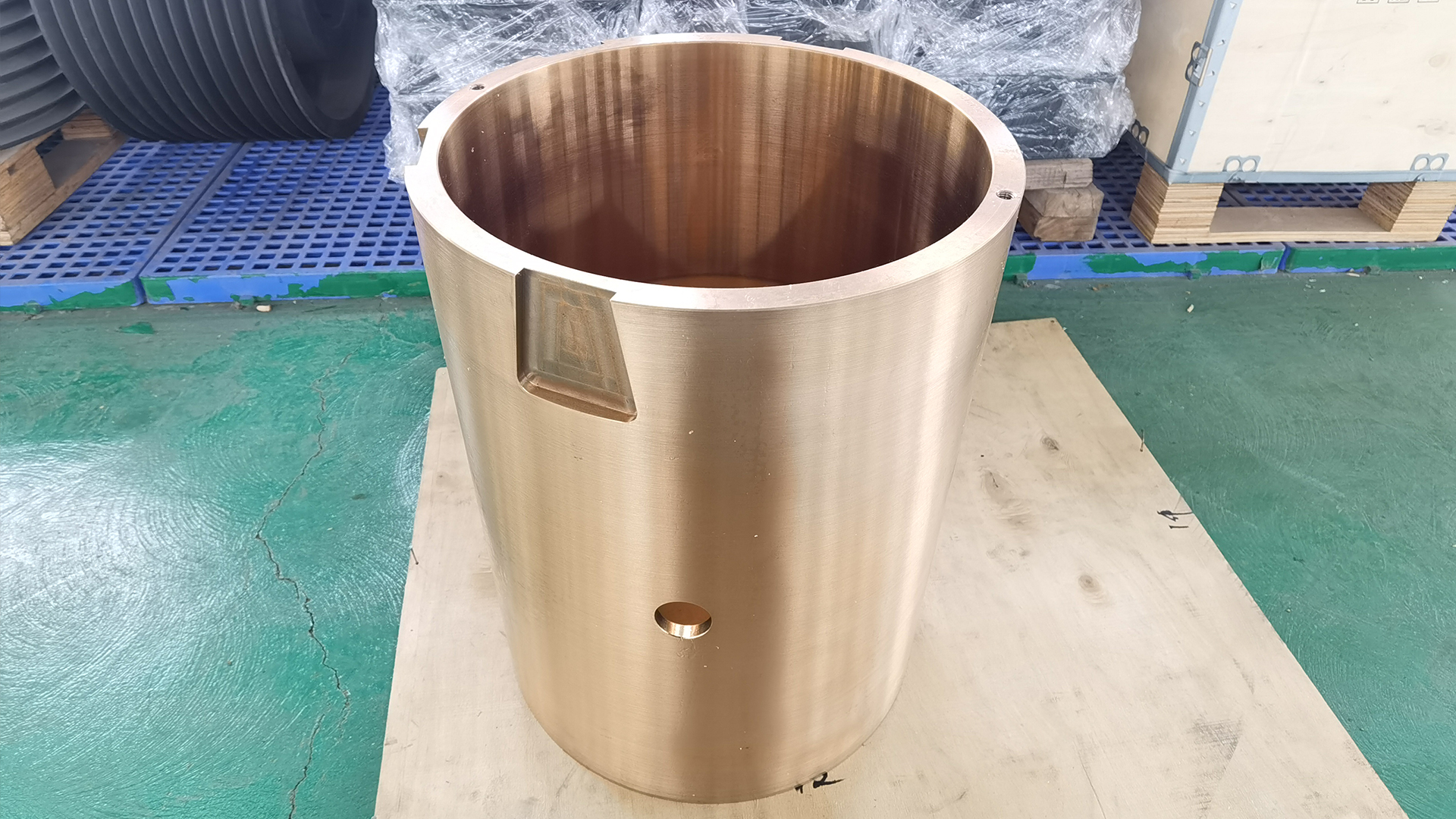

The core function of the eccentric copper sleeve in a cone crusher
Author:Klaus Richter
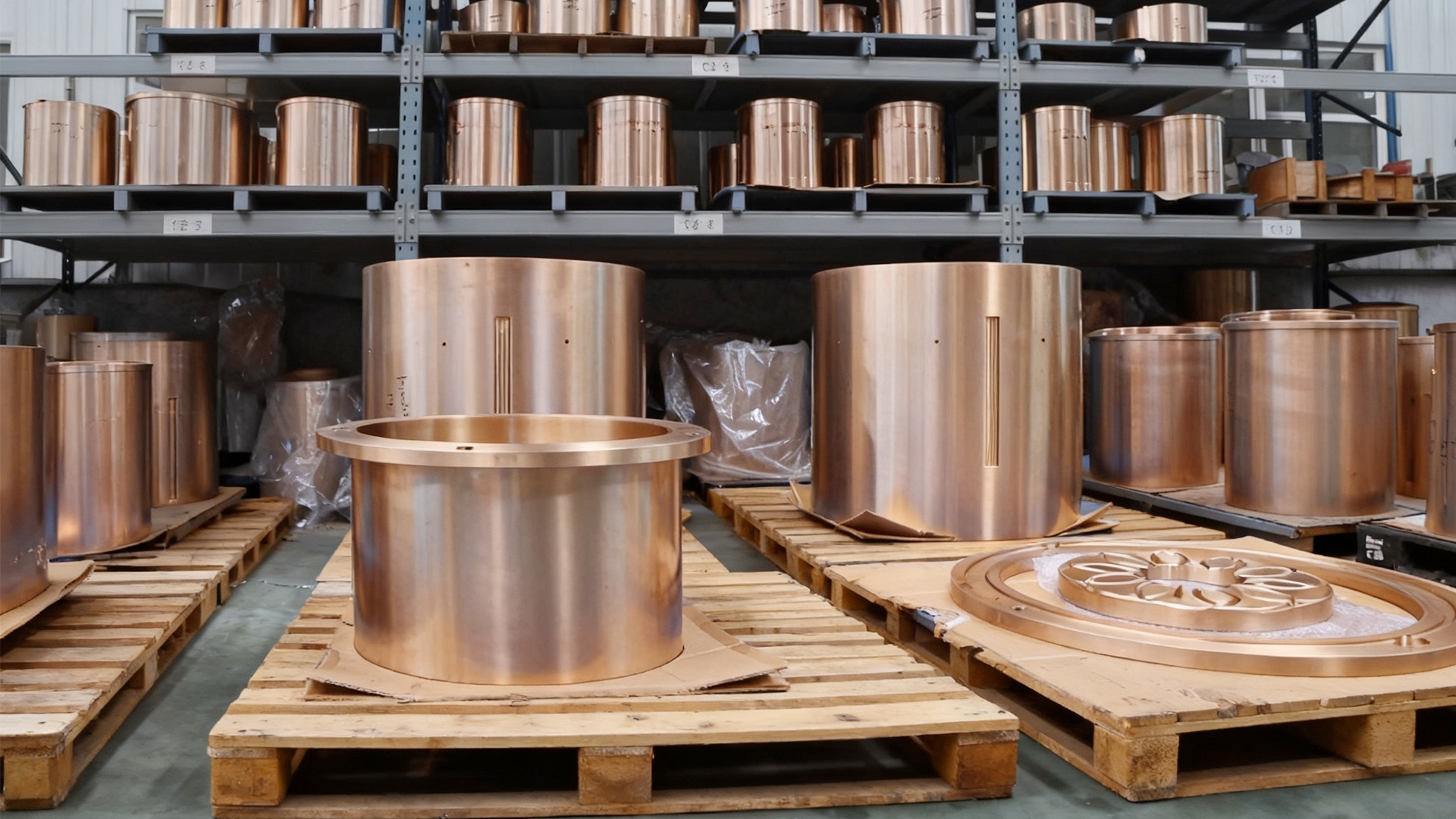
Cone crushers are indispensable medium and fine crushing equipment in industries such as mining, metallurgy, and building materials. Their efficient and stable operation relies on the coordinated operation of numerous precision components. Among these core components, the eccentric copper bushing plays an irreplaceable key role. Meanwhile, the continuous rise in copper prices in recent years is profoundly impacting the cost system of the manufacturing industry, including crusher parts.
The basic working principle of a cone crusher is as follows: the motor drives a small gear via a pulley, the small gear drives a large gear assembly to rotate, and the large gear in turn drives the eccentric sleeve assembly. In this power transmission chain, the eccentric copper sleeve and the eccentric cylinder liner together constitute the eccentric sleeve assembly. The eccentric copper sleeve is fixed inside the eccentric sleeve by an interference fit, playing a pivotal role in connecting the upper and lower parts of the assembly.
The core technological value of the eccentric copper sleeve lies in its unique “eccentric” structure—the center of the inner hole of the copper sleeve has a preset offset from the center of the outer circle. This design ensures that when the eccentric sleeve assembly rotates, the main shaft assembly (including the main shaft, inner cone, and inner cone liner) inserted into the copper sleeve does not rotate around its own centerline, but rather revolves around a theoretical vertical line. This combined revolution and rotation creates a complex gyratory trajectory for the inner cone within the crushing chamber: as the surface of the inner cone gradually approaches the fixed cone (jaw wall), the material is crushed; as the distance between them gradually increases, the crushed material is discharged by gravity. The eccentricity of the eccentric copper sleeve directly determines the oscillation stroke of the moving cone, which in turn affects the crusher’s processing capacity and discharge particle size.
Cone crushers withstand enormous impact loads during operation, and the eccentric copper bushing is essentially a heavy-duty sliding bearing. Its inner surface mates with the outer surface of the main shaft, while its outer surface mates with the inner hole of the eccentric bushing. During relative motion, it bears significant radial and frictional forces.
Copper alloys possess excellent self-lubricating and anti-galling properties, maintaining a relatively stable coefficient of friction even under boundary lubrication or insufficient oil conditions. Under normal operating conditions, the copper bushing and the main shaft rely on a lubricating oil film for liquid or mixed lubrication. However, if lubrication fails or the fit clearance is improper, the surface of the copper bushing can sag due to high temperatures. In severe cases, this can even lead to a “shaft seizure” and bushing burnout accident—the copper bushing and the main shaft are “welded” together instantaneously, causing severe equipment vibration or even shutdown.
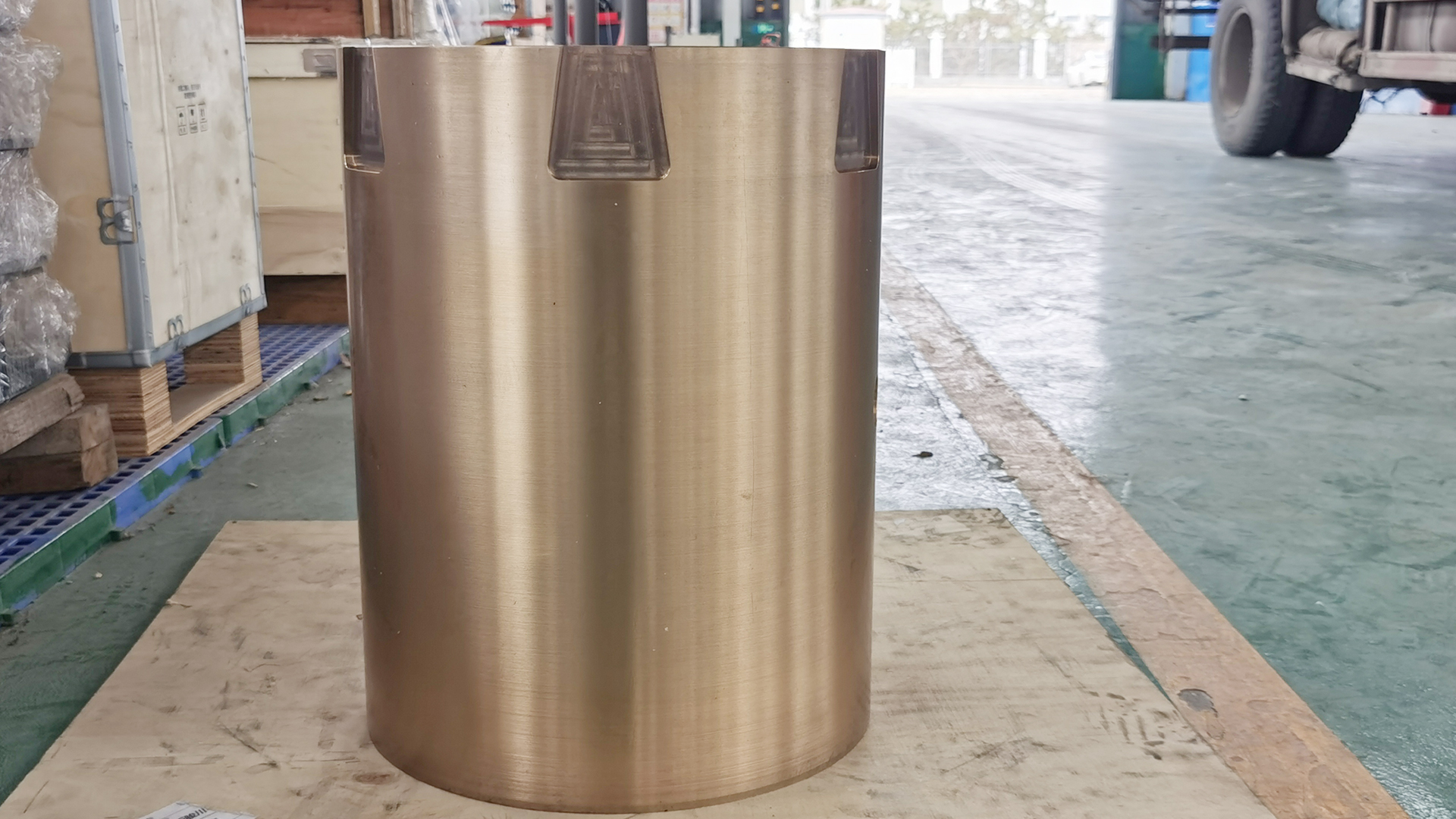
Therefore, the design and manufacturing precision of the eccentric copper bushing are crucial. The inner diameter tolerance must be controlled within ±0.02mm, and the fit clearances between the copper bushing and the main shaft, and between the copper bushing and the eccentric sleeve, must be rigorously calculated. Based on practical experience, when the copper bushing temperature rises to 50℃, a 0.31mm expansion of the outer diameter significantly affects the fit clearance, necessitating sufficient thermal expansion space during assembly.
The eccentric copper bushing is designed as a wear part; this is not a design flaw, but rather a sophisticated protective logic. When the crusher encounters uncrushable objects (such as metal blocks), the overload impact first acts on the copper bushing. Local deformation or wear of the copper bushing can absorb some of the impact energy, preventing damage to expensive and difficult-to-replace core components such as the main shaft and eccentric sleeve. The single-cylinder hydraulic cone crusher is also equipped with a hydraulic overload protection system. When uncrushable objects fall in, the moving cone can be lifted by the bottom hydraulic piston, serving as a discharge port adjustment and overload protection mechanism. In this process, the copper bushing acts as the first line of defense.
Regularly inspecting and replacing eccentric copper bushings is a crucial part of crusher maintenance. Well-managed mining companies will develop a scientific replacement cycle for copper bushings based on factors such as the nature of the material being crushed and the equipment’s operating time, thus balancing equipment uptime and maintenance costs.

