Equipping silos with “eyes”: An analysis of the application of level gauges in the mining and crushing field.

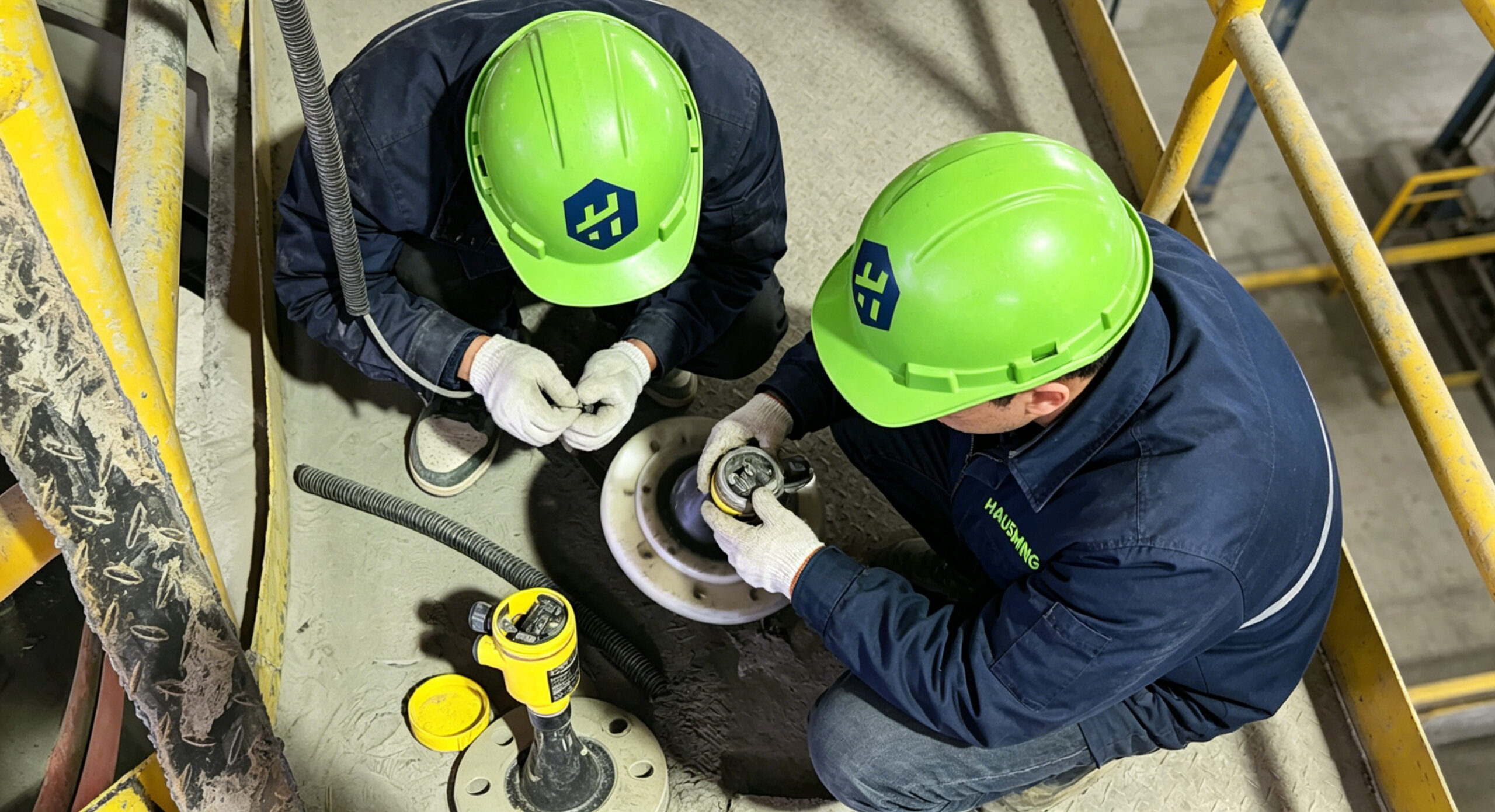
In a mining crushing production line, monitoring the material level in the silos and crushers is a seemingly simple yet crucial step. Proper material level control ensures a smooth and efficient production line; errors can lead to equipment “stockpiling” and shutdowns, or even damage to the crushing equipment and disrupt the entire plant’s production rhythm.

So, what role do level gauges play in the mining crushing field?

How do we choose the appropriate material level monitoring solution when facing harsh conditions such as high dust levels, large materials, and strong vibrations? This article will provide a detailed analysis.

I. Why are level gauges needed in mining crushing?

The core purpose of material level monitoring in the mining crushing process is to achieve “full feed”—that is, to maintain a suitable material level in the crushing chamber of the crusher. This sounds simple, but it’s not easy to do.

In the past, many mines used manual observation or open-loop control methods, with operators in the control room manually adjusting the feeder frequency based on experience. This method has significant drawbacks:

Efficiency loss: Operators cannot adjust the feed rate in time, the crusher cannot maintain a full feed state, resulting in low hourly efficiency and wasted energy.

Equipment Wear and Tear: Idle operation or unstable material levels in the crusher can cause vertical vibration, leading to damage to hydraulic cylinders, loosening of anchor bolts, and damage to copper bearing sleeves, thus shortening equipment lifespan.

Safety Accidents: Taking a coarse crusher as an example, operators cannot directly observe the material level in the lower hopper. Even slight negligence can cause ore accumulation accidents. Once ore accumulates in the hopper, handling it is extremely difficult and severely impacts production.

Therefore, the mining industry has gradually recognized that equipping hoppers and crushers with reliable “eyes” is a necessary condition for achieving automated and intelligent production.

II. Comparison of Mainstream Level Gauge Technologies: Which is More Suitable for Mines?

Mining environments are characterized by high dust levels, large particle sizes, and strong vibrations, making not all level gauges suitable. The following is a comparison of the performance of several common technologies in mining crushing scenarios:

  1. Radar Level Gauge (Non-Contact)

Working Principle: Emits frequency-modulated continuous wave (FMCW) microwave signals and calculates distance by measuring the frequency difference between the emitted and reflected waves.

Applicable Scenarios: Mine level measurement, crusher level measurement, and level monitoring in various silos.

Advantages:
① Strong dust penetration capability; high-frequency radar (e.g., 80GHz) beam focusing, less susceptible to dust interference.

② Unaffected by material repose angle, high reliability.

③ Non-contact, wear-free, and low maintenance cost.

④ High measurement accuracy (millimeter level) and large measuring range (over 100 meters).

Limitations: Higher cost and relatively complex installation and commissioning.

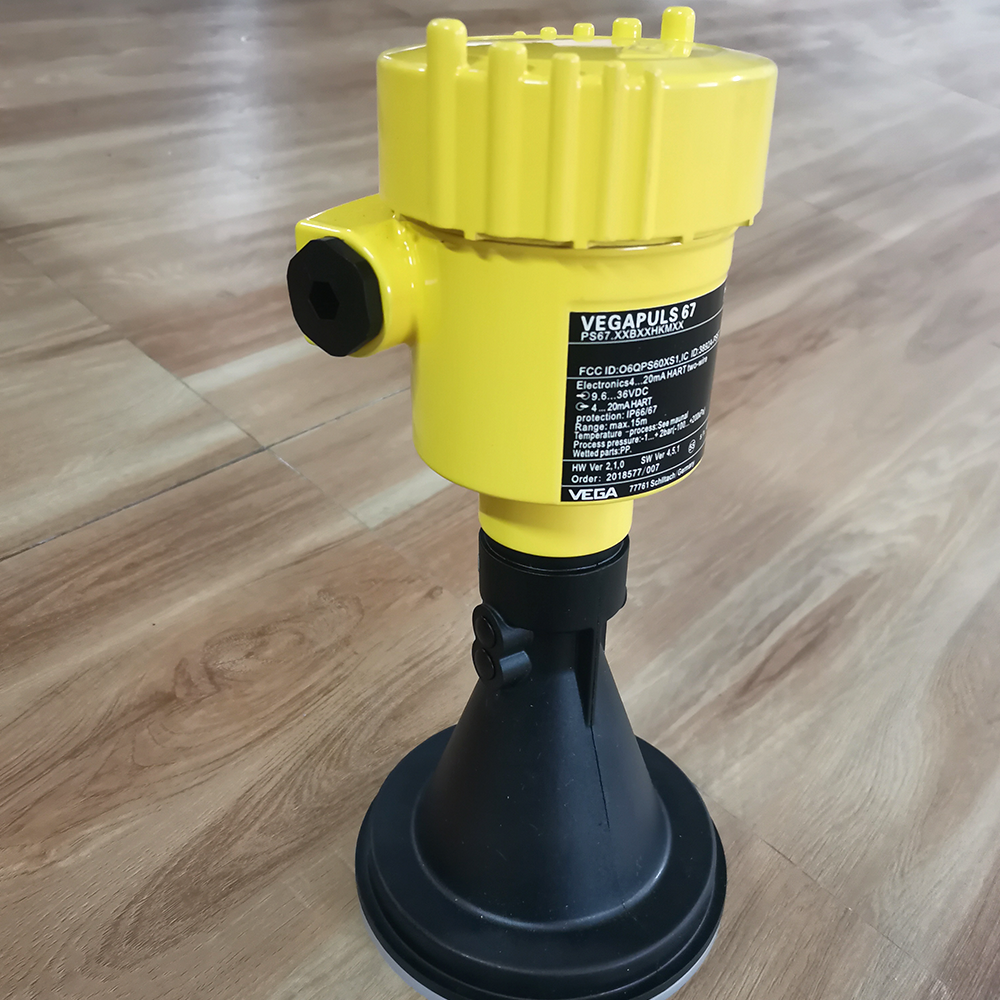
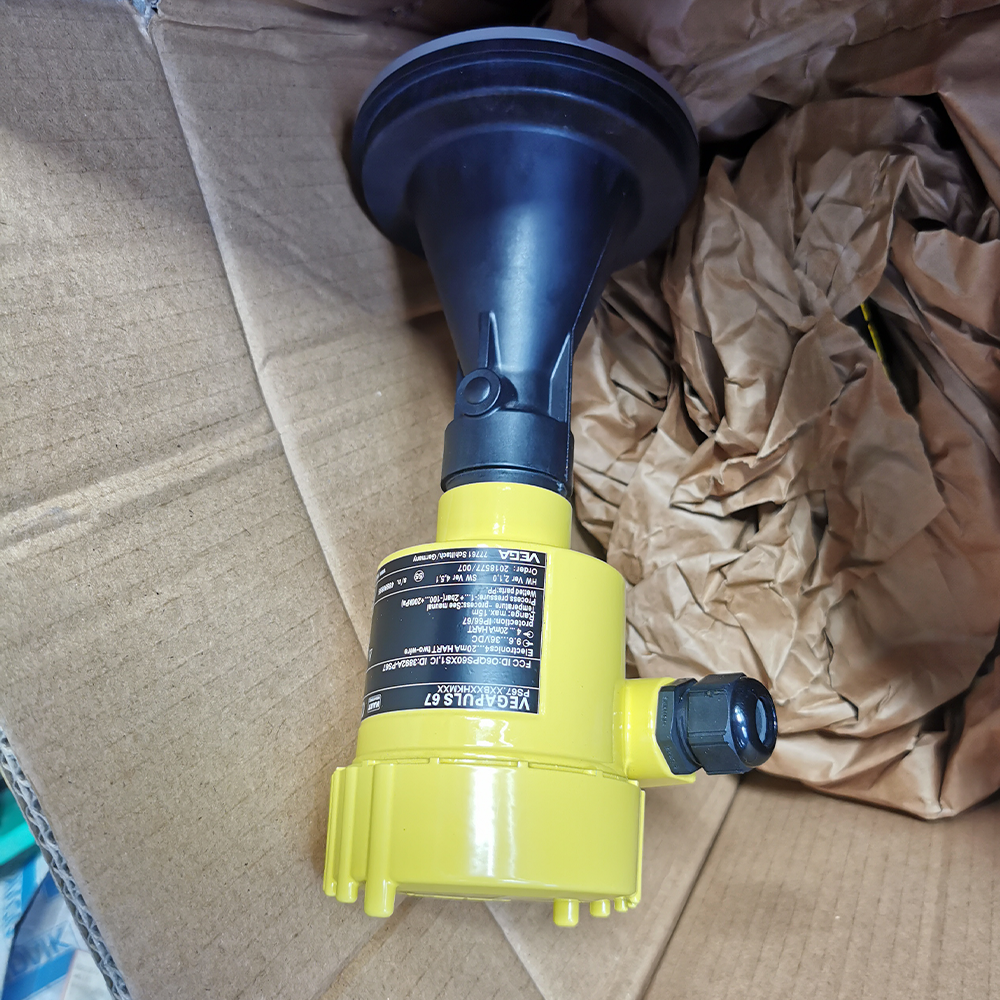
Application Case: In a limestone quarry, the VEGAPULS 67 radar level gauge was installed on a crusher, successfully solving the measurement challenges in low-reflectivity media and dusty environments.

  1. Rotary Paddle Level Gauge (Contact Type)
    Working Principle: Driven by a motor, the blades rotate. When material obstructs the blade rotation, a limit signal is triggered.

Applicable Scenarios: Feed hopper blockage detection, high-level alarm in silos.

Advantages:

① Simple structure, low cost

② Sensitive action, reliable alarm

③ Particularly suitable for detecting blockages in lumpy materials

  1. Laser Level Gauge
    Working Principle: Emits laser pulses and measures the reflection time difference to calculate distance (Time-of-Flight method).

Applicable Scenarios: Large ore stockpiles, high-precision inventory management.

Advantages: Extremely high accuracy (millimeter level), long measurement distance (up to 500 meters), narrow beam, less susceptible to interference.

Limitations: Laser signal is easily attenuated and scattered by high concentrations of dust; higher cost.

  1. Ultrasonic Level Gauge
    Working Principle: Emits ultrasonic pulses and measures the echo time difference.

Advantages: Mature technology, low cost.

Limitations: Weak signal, greatly affected by dust, temperature, and pressure changes; poor reliability in dusty mining environments. Not recommended for high-dust mining crushing scenarios.

III. Selection Recommendations: How to select for different locations in the crushing process? Based on technical characteristics and actual working conditions, here are the selection recommendations for each stage of the crushing production line:

Application Location | Recommended Solution | Key Considerations

Coarse Crusher Lower Hopper | Radar Level Gauge | Large measurement range, strong dust penetration ability

Medium/Fine Crusher Crushing Chamber | Radar Level Gauge + Rotary Paddle Type (Backup) | Real-time monitoring of material level in the crushing chamber, achieving full feeding

Feeding Hopper/Clubbing | Rotary Paddle Type Level Gauge | Detects blockages, achieving interlock control

Buffer Ore Bin/Finished Product Silo | Radar Level Gauge | Non-contact, maintenance-free, continuous and reliable measurement

Vibrating Screen Discharge Hopper | Rotary Paddle Type or Radar (depending on working conditions) | Rotary paddle type can be used for high-level alarm when space is limited

IV. Installation Points: Avoid These Pitfalls

Selecting the right equipment is only the first step; improper installation can also lead to measurement failure. The following are key considerations during installation:

  1. Avoid the feed inlet and the main impact zone of the material.

Under vertical discharge conditions (such as chute discharge), the material has a huge impact force on the probe, which can easily cause the probe to bend or be damaged.

Solution: 1. Nest-style installation: The level switch is installed in a side recess, allowing the probe to avoid the main impact path of the material. The critical dimension ‘a’ must be greater than the probe insertion depth to ensure effective protection.

  1. High-frequency radar preferred for high-dust environments: In high-dust areas such as inside crushers, ordinary radar signals may suffer severe attenuation. 80GHz high-frequency radar has a more concentrated beam and stronger dust penetration, making it the preferred choice for such conditions.
  2. Inclined installation to prevent material buildup: For horizontally installed probes (such as rotary paddle or tuning fork types), a 20° tilt is recommended to prevent material buildup on the probe and avoid malfunctions.
  3. Signal integration with control system for interlocking: The value of level gauges lies not only in “seeing” but also in “controlling.” The level signal should be integrated into a PLC or DCS system to achieve automatic interlocking control with the feeding equipment, truly realizing automated production with “full feed.”

The application of level gauges in the mining crushing field has evolved from an early “auxiliary tool” to a “core control element.” It is not only the “eyes” of the silo, but also the nerve endings that enable automated and intelligent production.

By selecting appropriate level gauge technology (high-frequency radar is the preferred choice for harsh mining conditions) and using the correct installation method to connect the signal to the automatic control system, mining companies can significantly improve crushing efficiency, reduce equipment failure rates, and minimize manual intervention costs.

Leave a Reply

Your email address will not be published. Required fields are marked *

← Back

Thank you for your response. ✨

The high electricity bills of a crushing production line are not due to the motor!

Many mine owners complain that despite running their equipment at full capacity and not significantly increasing output, their electricity bills exceed their limits every month. Everyone assumes it’s due to the motor’s high power consumption or expensive fuel, but few realize that the root cause of the high electricity bills often lies not in the power source, but in “unnecessary losses.”

A normally operating crushing production line should have stable and controllable electricity costs. However, in reality, material blockages, stalling, idling, improper clearances, excessive wear on wear parts, poor lubrication, belt slippage… every small problem is secretly consuming electricity.

To give a very intuitive example: Severe wear of the jaw plates/liners reduces the biting capacity, requiring repeated crushing, causing the current to surge by 20%–40%. For the same output, power consumption increases dramatically. Improper gap adjustment leads to poor discharge and material circulation, causing the equipment to operate under high load for extended periods, consuming tens of kilowatt-hours more per hour. Lubrication failure and increased bearing resistance force the motor to be overloaded, resulting in artificially high power consumption without improving efficiency. Even slight belt slippage can reduce output and increase power consumption; the lower the output, the higher the unit electricity cost.

The real way to save on electricity costs isn’t to reduce machine usage, but to operate equipment with “light load and high efficiency”: Replace wear-resistant parts promptly to maintain optimal crushing performance; regularly adjust clearances, tighten belts, and ensure stable feeding to avoid unnecessary work; maintain bearings and hydraulic systems properly to reduce operating resistance; and stock up on vulnerable parts in advance to avoid operating with defects and high consumption with low efficiency. Many customers have found that spending a few thousand yuan more each month on maintenance and stocking up can actually save tens of thousands of yuan in electricity costs, while increasing output by 10%–20%. This is far more cost-effective than simply “saving electricity.”

Hausming focuses on optimizing crushing production lines, providing one-stop service from equipment debugging, wear-resistant part selection, and clearance adjustment to daily operation and maintenance, helping you reduce electricity consumption and increase capacity. Minimizing unnecessary electricity costs and maximizing stable profits is the key to efficient mine operation!

Common fault diagnosis and solutions for multi-cylinder cone crushers!

In crushing production lines for mines, sand and gravel aggregates, etc., the cone crusher serves as the core equipment for medium and fine crushing. Its stable operation directly determines the productivity and efficiency of the entire production line. However, during long-term high-load operations, equipment is inevitably prone to various malfunctions, which not only affect production efficiency but also accelerate component wear and increase operation and maintenance costs.


Today, we will analyze the causes and standardized solutions of three typical problems based on high-frequency failures in on-site operation and maintenance, to assist frontline engineers in quickly identifying and efficiently resolving issues, ensuring that the equipment maintains optimal operating conditions at all times.

  1. Oil leakage from the crusher: an “early warning signal” for the lubrication system
    Oil leakage is the most common lubrication system failure in cone crushers. Essentially, it is caused by the inability of lubricating oil to flow back normally and seal failure, leading to oil spillage. If not addressed promptly, it can cause serious accidents such as bearing burnout and gear wear.
    Core fault reason:
  2. Seal failure: The primary cause of oil leakage is the loss of sealing function due to long-term immersion and wear of “T” or “U” shaped seals in oil.
  3. Abnormal safety valve: Incorrect set pressure of the safety valve or a stuck spring can lead to abnormal system pressure, excessive lubricant flow, and seal breakage, resulting in oil leakage.
  4. Improper selection of oil product: The lubricating oil has a too high viscosity and poor fluidity, which prevents smooth backflow and leads to oil accumulation in the cavity, resulting in oil spillage.
  5. Blockage of oil return pipeline: The oil return pipeline is blocked by contaminants such as mineral powder and debris, resulting in increased oil return resistance and forcing lubricating oil to overflow from the seal.
    Standardized solution:
  6. Seal replacement: Regularly check the wear condition of the seals. If there is any aging, deformation, or damage, immediately replace the seals with the same specifications to ensure the sealing surface fits tightly.
  7. Safety valve calibration and replacement: Recalibrate the set pressure of the safety valve. If the spring is stuck or the valve body is worn, replace it with a brand new safety valve. At the same time, check whether the lubricating oil flow exceeds the standard.
  8. Oil optimization: Based on equipment operating conditions and ambient temperature, select lubricating oil with a viscosity grade that meets the manufacturer’s requirements to avoid poor backflow caused by high viscosity oil.
  9. Dredging of the oil return system: Regularly inspect the oil return pipe and oil return filter, and promptly disassemble and clean them if any blockage is found, to ensure the smooth flow of the oil return pipeline.

II. Crusher stall: “power failure” of the transmission system
Stalling refers to an abnormal decrease in the rotational speed of the crusher’s main shaft, which directly leads to a sharp drop in crushing efficiency and deterioration of product particle shape. In severe cases, it can cause accidents such as stalled crusher and motor burnout.
Core fault reason:

  1. Triangular belt slack: Due to long-term stretching and wear, the belt lacks tension, causing slippage and unable to transmit sufficient power, resulting in a decrease in speed.
  2. Drive motor failure: Electrical faults such as motor winding short circuit, bearing damage, and abnormal power supply can cause insufficient motor output power, leading to stall.
  3. Material accumulation at the discharge port: A fault in the discharge belt beneath the crusher, coupled with an excessive feed rate, leads to material accumulation beneath the crushing chamber, forming a “blockage” that hinders the rotation of the main shaft.
    Standardized solution:
  4. Belt tensioning and replacement: Adjust the belt tension according to the manufacturer’s requirements. If the belt exhibits cracks, aging, or slippage, promptly replace it with a set of triangular belts of the same model to avoid mixing old and new belts.
  5. Motor status inspection: Compare the idling power of the crusher with the no-load power of the motor (without the belt), if the readings are close, it indicates that the motor has a fault. Immediately arrange for an electrician to inspect and repair the windings, bearings, and power supply system.
  6. Optimization of the discharge system: Check the operating status of the discharge belt, control the feeding amount, and avoid material accumulation; a rotary detector can be installed under the discharge belt, which is interlocked with the feeder, and automatically stops the machine for protection in case of material blockage.
    III. Excessive vibration: a “health alert” for equipment operation
    Abnormal vibration is the “source of all ills” for cone crushers, which not only accelerates the wear of components such as liners, bearings, and gears, but also affects the stability of the foundation and triggers cascading failures.
    Core fault reason:
  7. Abnormal counterweight system: Wear and imbalance of the counterweight are the core causes of excessive vibration, which directly leads to eccentric operation of the main shaft and generates severe vibrations.
  8. Abnormal gear meshing: Improper adjustment of tooth root clearance and gear meshing impact lead to periodic vibration.
  9. Transmission shaft failure: Bending or deformation of the transmission shaft can lead to transmission eccentricity, resulting in significant vibration.
  10. Unbalanced pulley: The pulley is adhered with mineral powder and unevenly worn, causing the dynamic balance to fail and triggering vibration.
  11. Installation and foundation issues: If the equipment is not installed level, the foundation’s bearing capacity is insufficient, or the skids are loose, it can lead to overall vibration of the machine.
  12. Liner plate and brake failure: Loosening/wear of the fixed cone liner plate and failure of the movable cone to brake can disrupt the force balance in the crushing chamber, leading to vibration.
  13. Abnormal Rotation Speed: If the rotation speed of the transmission shaft is too high, exceeding the design range of the equipment, it will amplify the vibration amplitude.
    Standardized solution:
  14. Repair of counterweight system: After wear and tear, the counterweight should be repaired or replaced in a timely manner. If necessary, contact the manufacturer for dynamic balance calibration.
  15. Gear clearance adjustment: By elevating and raising the eccentric sleeve, the tooth root clearance is corrected to ensure smooth gear meshing.
  16. Transmission shaft replacement: If the transmission shaft is bent and cannot be corrected, replace it with a brand new one to avoid fatigue fracture.
  17. Belt pulley cleaning and balancing: Regularly clean the mineral powder and dirt on the belt pulley to ensure dynamic balance, and perform dynamic balance correction if necessary.
  18. Foundation and installation inspection: Inspect the levelness of the equipment and the condition of the skids, reinforce the foundation, and ensure that the bearing capacity meets the requirements.
  19. Maintenance of lining plate and braking system: When the lining plate becomes loose or worn, it should be dismantled and replaced immediately; if the moving cone brake fails, the brake should be replaced directly to ensure reliable braking.
  20. Speed calibration: Adjust the rotational speed of the drive shaft according to the equipment design parameters to avoid overspeed operation.
Read more: Common fault diagnosis and solutions for multi-cylinder cone crushers!

← Back

Thank you for your response. ✨

Looking forward to your feedback(Thank you)

Leave a Reply

Your email address will not be published. Required fields are marked *