As the wave of artificial intelligence sweeps across every sector, the industrial realm is ushering in a new era of disruptive transformation. The traditional mining model—characterized by extensive extraction, manual supervision, high energy consumption, and significant safety hazards—has long since failed to keep pace with the times. Today, the AI era has officially arrived; a revolution in the intelligentization of crushing and screening equipment is imminent, and the full-scale implementation of AI-driven smart mines is now a matter of immediate urgency.
As the primary source of raw materials for industry, mines rely on the crushing and screening stage as the critical core of their entire production chain. From the initial crushing and grading of raw ore to material conveyance and finished product stockpiling, traditional models have long relied on human experience for operation: equipment startup and shutdown are based on human judgment; load adjustments depend on the “feel” of veteran operators; fault diagnosis relies on reactive maintenance; and neither production capacity nor energy consumption can be precisely controlled. This approach not only results in persistently high labor costs but also presents a host of critical pain points, including harsh working environments, elevated safety risks, limited production efficiency, and severe resource waste.
However, empowered by the deep integration of AI technology, big data, the Internet of Things (IoT), and machine vision, crushing and screening equipment is now shedding its traditional mechanical nature. It is making a transformative leap toward a new paradigm defined by intelligent perception, autonomous control, predictive diagnostics, and unmanned operation—a revolution in intelligentization for the crushing and screening industry that is now quietly unfolding.
AI-Powered Crushing and Screening Equipment: Reshaping the Logic of Production
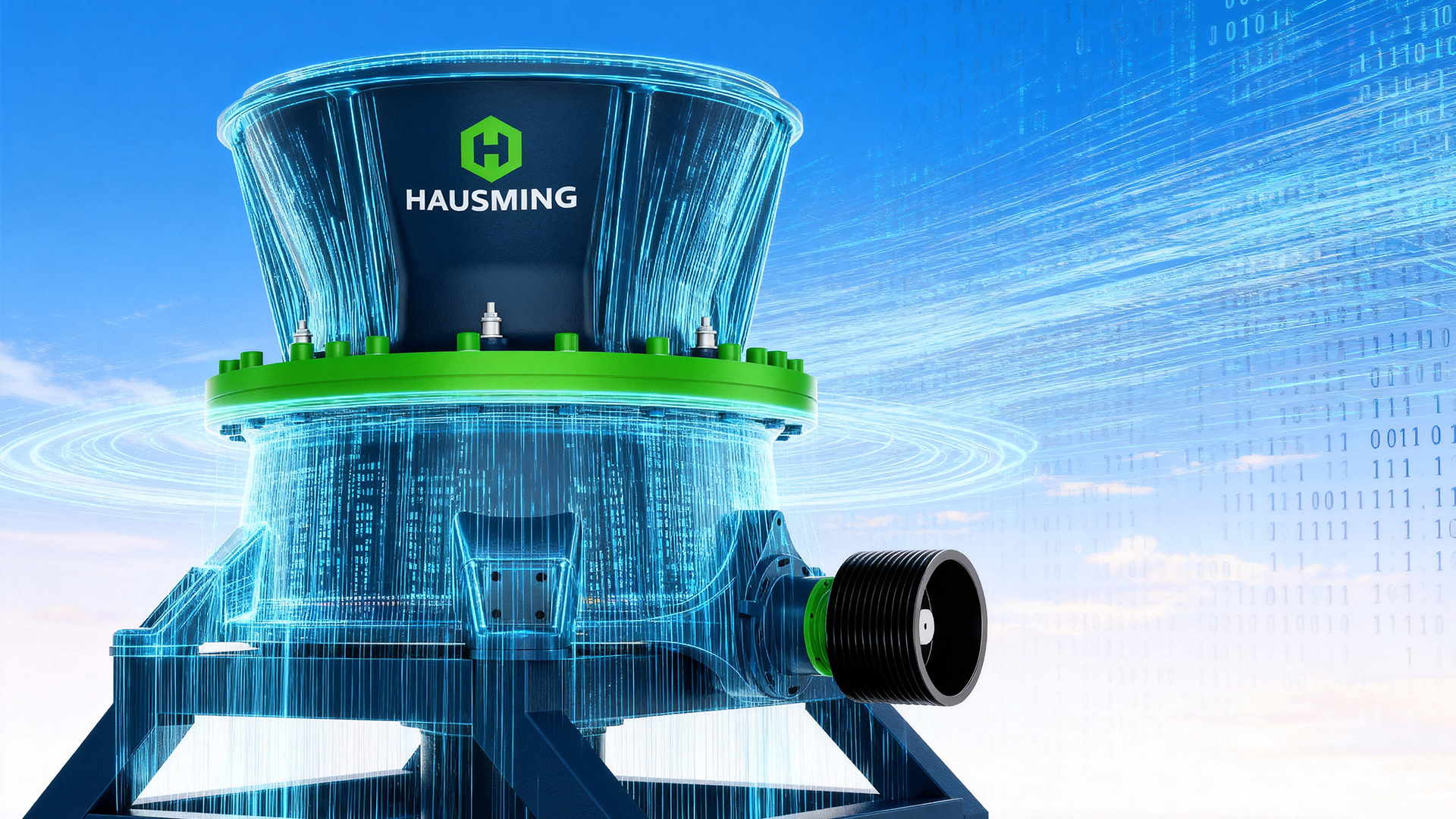
Leveraging AI algorithms and intelligent sensing technology, a new generation of smart crushing and screening equipment has achieved a comprehensive, intelligent upgrade across its entire operational workflow. AI enables the real-time collection of hundreds of data points—including operating current, vibration frequency, oil temperature and load, material moisture levels, and feed particle size—which are then processed and analyzed in real-time via big data models. In response to fluctuating operating conditions—such as uneven material hardness or variations in feed volume—the AI autonomously adjusts the crusher’s rotational speed, liner gap, and feeding rate, while the screening equipment automatically fine-tunes its amplitude and frequency, thereby ensuring the machinery consistently operates under optimal conditions.
Furthermore, the AI system is equipped with an intelligent fault diagnosis module that breaks away from the traditional, passive “repair-after-failure” maintenance paradigm. By applying deep learning to historical operational data, the system proactively identifies potential issues—such as bearing wear, liner aging, motor anomalies, or oil circuit malfunctions—and issues early maintenance alerts. This enables true predictive maintenance, significantly reducing equipment downtime, extending service life, and lowering operational and maintenance costs.
In addition, the integration of machine vision and AI recognition technologies allows for the automatic identification of on-site conditions—including material specifications, the presence of foreign debris, and material blockages or jams. This capability facilitates intelligent, synchronized control across the entire production line—encompassing feeding, crushing, screening, and conveying equipment—enabling autonomous start-ups, shutdowns, and coordinated adjustments. This approach genuinely minimizes the need for human intervention and effectively resolves common production challenges—such as machine blockages, overloading, and wasteful idling—by addressing them directly at the source.
From single-device intelligence to full-scenario deployment, AI-powered smart mines are unstoppable.
The intelligentization of crushing and screening equipment marks merely the starting point of the “smart mine” concept. The current industry trend has long since evolved beyond the intelligence of individual machines, shifting toward the construction of fully integrated, AI-driven smart mines that encompass the entire operational workflow and mining site.
By integrating data from every stage—including crushing, screening, transportation, mining, dust suppression, security, and energy management—a comprehensive AI-driven smart control and management platform for mines is established. This enables intelligent production dispatching, visualized tracking of personnel and vehicles, granular management of energy consumption, round-the-clock security monitoring, and real-time tracking of environmental emissions.
Unmanned crushing and screening workshops, AI-driven fleet dispatching, autonomous underground mining operations, intelligent security risk alerts, and AI-optimized energy conservation—these smart mine scenarios, once confined to the realm of conceptualization, are now being progressively implemented across major sand and gravel mines, metal mines, and aggregate production lines throughout China.
At the policy level, the development of “green mines,” “smart mines,” and energy conservation has become a mandatory requirement for the industry. At the market level, rising raw material costs, labor shortages, and increasingly stringent safety regulations are compelling mining enterprises to undergo a transformative upgrade. Consequently, investing in intelligent crushing and screening systems and establishing AI-driven smart mines is no longer merely an optional strategic path; it has become a mandatory imperative for the survival and future growth of mining enterprises.
Ride the Tide: Embrace the New Wave of Intelligent Mining
Industry evolution waits for no one; clinging to traditional production models will inevitably lead to market obsolescence. AI is not a distant technological abstraction, but a practical tool that is tangibly being implemented across every stage of the crushing and screening process.
In the future, competition within the mining sector will ultimately hinge on the level of intelligence, the sophistication of digital management, the capacity for energy conservation and cost reduction, and the strength of safety production capabilities. Enterprises that take the lead in deploying AI-driven crushing and screening equipment—thereby establishing “smart mining” production lines—will firmly secure advantages in production capacity, cost efficiency, operational safety, and market positioning.
Technology empowers industry; intelligence leads the future. Amidst the surging tide of the AI era, the intelligent revolution in crushing and screening has already arrived, and the development of smart mines has become a matter of urgent necessity. Embracing artificial intelligence to align with this trend—and accelerating both equipment upgrades and digital transformation—represents the only viable path for the mining industry to break through current challenges and achieve sustainable, long-term growth.