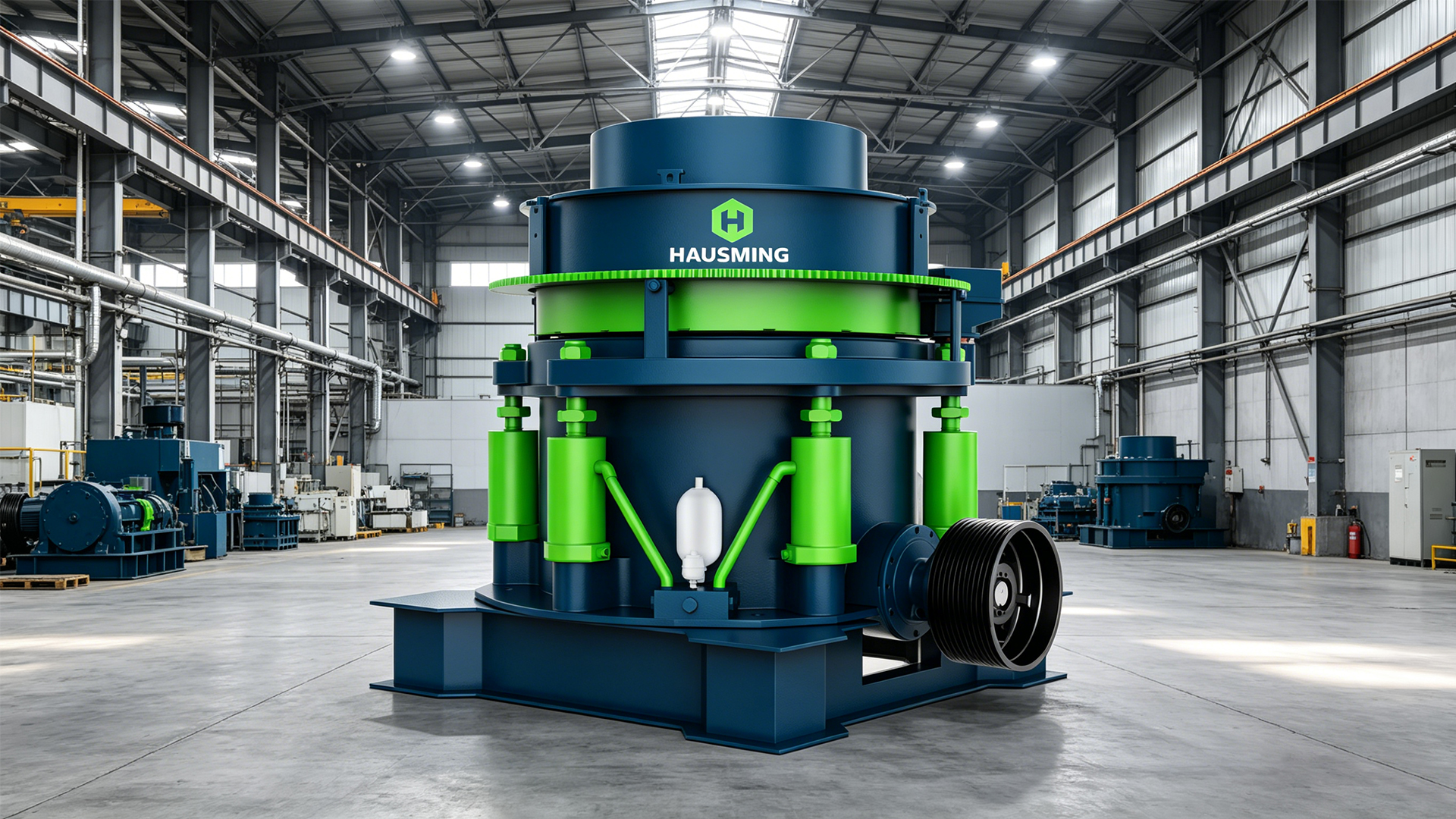

In crushing production lines for mines, sand and gravel aggregates, etc., the cone crusher serves as the core equipment for medium and fine crushing. Its stable operation directly determines the productivity and efficiency of the entire production line. However, during long-term high-load operations, equipment is inevitably prone to various malfunctions, which not only affect production efficiency but also accelerate component wear and increase operation and maintenance costs.
Today, we will analyze the causes and standardized solutions of three typical problems based on high-frequency failures in on-site operation and maintenance, to assist frontline engineers in quickly identifying and efficiently resolving issues, ensuring that the equipment maintains optimal operating conditions at all times.
- Oil leakage from the crusher: an “early warning signal” for the lubrication system
Oil leakage is the most common lubrication system failure in cone crushers. Essentially, it is caused by the inability of lubricating oil to flow back normally and seal failure, leading to oil spillage. If not addressed promptly, it can cause serious accidents such as bearing burnout and gear wear.
Core fault reason: - Seal failure: The primary cause of oil leakage is the loss of sealing function due to long-term immersion and wear of “T” or “U” shaped seals in oil.
- Abnormal safety valve: Incorrect set pressure of the safety valve or a stuck spring can lead to abnormal system pressure, excessive lubricant flow, and seal breakage, resulting in oil leakage.
- Improper selection of oil product: The lubricating oil has a too high viscosity and poor fluidity, which prevents smooth backflow and leads to oil accumulation in the cavity, resulting in oil spillage.
- Blockage of oil return pipeline: The oil return pipeline is blocked by contaminants such as mineral powder and debris, resulting in increased oil return resistance and forcing lubricating oil to overflow from the seal.
Standardized solution: - Seal replacement: Regularly check the wear condition of the seals. If there is any aging, deformation, or damage, immediately replace the seals with the same specifications to ensure the sealing surface fits tightly.
- Safety valve calibration and replacement: Recalibrate the set pressure of the safety valve. If the spring is stuck or the valve body is worn, replace it with a brand new safety valve. At the same time, check whether the lubricating oil flow exceeds the standard.
- Oil optimization: Based on equipment operating conditions and ambient temperature, select lubricating oil with a viscosity grade that meets the manufacturer’s requirements to avoid poor backflow caused by high viscosity oil.
- Dredging of the oil return system: Regularly inspect the oil return pipe and oil return filter, and promptly disassemble and clean them if any blockage is found, to ensure the smooth flow of the oil return pipeline.
II. Crusher stall: “power failure” of the transmission system
Stalling refers to an abnormal decrease in the rotational speed of the crusher’s main shaft, which directly leads to a sharp drop in crushing efficiency and deterioration of product particle shape. In severe cases, it can cause accidents such as stalled crusher and motor burnout.
Core fault reason:
- Triangular belt slack: Due to long-term stretching and wear, the belt lacks tension, causing slippage and unable to transmit sufficient power, resulting in a decrease in speed.
- Drive motor failure: Electrical faults such as motor winding short circuit, bearing damage, and abnormal power supply can cause insufficient motor output power, leading to stall.
- Material accumulation at the discharge port: A fault in the discharge belt beneath the crusher, coupled with an excessive feed rate, leads to material accumulation beneath the crushing chamber, forming a “blockage” that hinders the rotation of the main shaft.
Standardized solution: - Belt tensioning and replacement: Adjust the belt tension according to the manufacturer’s requirements. If the belt exhibits cracks, aging, or slippage, promptly replace it with a set of triangular belts of the same model to avoid mixing old and new belts.
- Motor status inspection: Compare the idling power of the crusher with the no-load power of the motor (without the belt), if the readings are close, it indicates that the motor has a fault. Immediately arrange for an electrician to inspect and repair the windings, bearings, and power supply system.
- Optimization of the discharge system: Check the operating status of the discharge belt, control the feeding amount, and avoid material accumulation; a rotary detector can be installed under the discharge belt, which is interlocked with the feeder, and automatically stops the machine for protection in case of material blockage.
III. Excessive vibration: a “health alert” for equipment operation
Abnormal vibration is the “source of all ills” for cone crushers, which not only accelerates the wear of components such as liners, bearings, and gears, but also affects the stability of the foundation and triggers cascading failures.
Core fault reason: - Abnormal counterweight system: Wear and imbalance of the counterweight are the core causes of excessive vibration, which directly leads to eccentric operation of the main shaft and generates severe vibrations.
- Abnormal gear meshing: Improper adjustment of tooth root clearance and gear meshing impact lead to periodic vibration.
- Transmission shaft failure: Bending or deformation of the transmission shaft can lead to transmission eccentricity, resulting in significant vibration.
- Unbalanced pulley: The pulley is adhered with mineral powder and unevenly worn, causing the dynamic balance to fail and triggering vibration.
- Installation and foundation issues: If the equipment is not installed level, the foundation’s bearing capacity is insufficient, or the skids are loose, it can lead to overall vibration of the machine.
- Liner plate and brake failure: Loosening/wear of the fixed cone liner plate and failure of the movable cone to brake can disrupt the force balance in the crushing chamber, leading to vibration.
- Abnormal Rotation Speed: If the rotation speed of the transmission shaft is too high, exceeding the design range of the equipment, it will amplify the vibration amplitude.
Standardized solution: - Repair of counterweight system: After wear and tear, the counterweight should be repaired or replaced in a timely manner. If necessary, contact the manufacturer for dynamic balance calibration.
- Gear clearance adjustment: By elevating and raising the eccentric sleeve, the tooth root clearance is corrected to ensure smooth gear meshing.
- Transmission shaft replacement: If the transmission shaft is bent and cannot be corrected, replace it with a brand new one to avoid fatigue fracture.
- Belt pulley cleaning and balancing: Regularly clean the mineral powder and dirt on the belt pulley to ensure dynamic balance, and perform dynamic balance correction if necessary.
- Foundation and installation inspection: Inspect the levelness of the equipment and the condition of the skids, reinforce the foundation, and ensure that the bearing capacity meets the requirements.
- Maintenance of lining plate and braking system: When the lining plate becomes loose or worn, it should be dismantled and replaced immediately; if the moving cone brake fails, the brake should be replaced directly to ensure reliable braking.
- Speed calibration: Adjust the rotational speed of the drive shaft according to the equipment design parameters to avoid overspeed operation.


Schreibe einen Kommentar